
Synopsis:
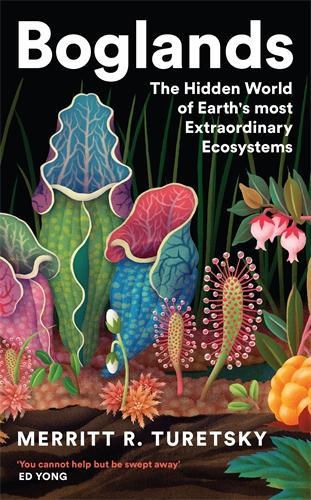
Bogs form from an overabundance of death, organic matter breaking down to form layer upon layer of peat. That peat gives rise to lifeforms that challenge our understanding of biology itself: amphibian-eating plants and acid-flinging mosses, plant clones that span thousands of square miles and subterranean ‘zombie’ fires which smoulder under peat for years at a time. These fecund, sumptuous places have an ecology like nowhere else.
Ranging from Greece, home to the world’s oldest bog, to Antarctica’s proto-bogs, Merritt Turetsky guides us through these dark, vertical landscapes which archive millennia of Earth’s history and shelter some of Earth’s rarest and most precious organisms. A glorious marriage of nature and science, Boglands will irrevocably change the way you see the natural world.
Genre: Nature Non-Fiction
Publisher: Profile Books
Pub Date: 17 September 2026
Disclaimer: This book was sent to me for free by the publisher.

Review:
Bogs have always fascinated me. For one, they contain many mosses, my favourite plant family. For another, they are ethereal places, mysterious and seemingly unknowable because they are so hard to traverse. I didn’t grow up around bogs, but I always found myself reading about them, so when @profile.books offered to send me a copy of Boglands by Merritt Turetsky, I leapt at the chance.
Bogs are unique worlds, places where life and death are almost the same thing. The dead things give rise to the creation of peat, the very heart of a bog. Sphagnum, the hero and driving force of these ecosystems, is itself a thing simultaneously dead and alive.
Boglands also have a long life-and-death history with humans. Whether stumbling in by accident or being laid to rest with reverence, many humans (and animals) have been found perfectly preserved in peat. This is, I think, something we all are aware of, but perhaps less well known, is the life-giving role bogs have played for some communities. I loved this part of the book, where we explored how persecuted peoples sought refuge in these landscapes all across the world. For many of us, bogs are inhospitable, but for a few, they are places of solace and protection.
This is just a little of what Turetsky covers in this book. There are so many layers to bogs, and I found that each topic covered gave enough information for a reader to understand exactly what they needed to. As a botany student, I would have loved more detail, but then again that is something I often find with anything that’s not a textbook! The writing is accessible and easy to engage with, and I absolutely recommend it to anyone who has even a passing interest in the environment. Bogs are super cool, and we should all know about and appreciate them!


Leave a Reply