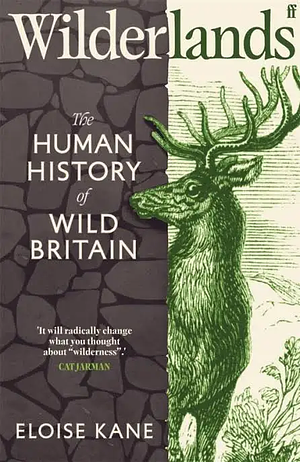
Synopsis:
When was Britain last truly wild? And what, if anything, remains? This is the unexpectedly human history of wild Britain.
In Wilderlands, archaeologist Eloise Kane unearths 12,000 years of our changing relationship with and influence on the landscape. Through prehistory, Roman occupation, the Middle Ages and beyond, we see the unfamiliar beasts of our old wild make way for species such as brown hare and fallow deer, now romanticised as eternal symbols of the British countryside, but introduced much later than we might think.
Places free from our influence haven’t existed for a very long time. But Eloise Kane invites us to rethink our definition of the wild – not as separate from us. Seen anew as the result of millions of human lives lived, Wilderlands demonstrates how we are integral to the ecology and biodiversity of our land – with the power to shape its future.
Genre: Nature Non-Fiction
Publisher: Faber Books
Pub Date: 23 April 2026
This book was sent to me by the publisher for free.

Review:
What comes to mind when you think of wild places? Maybe it’s the rolling hills of the countryside, the sea cliffs of the south, or a tangle of ancient woodland? In Wilderlands, these views will be challenged, as we journey through the history of the UK and discover just how ‘wild’ we actually are.
We explore the human history of our isle, starting around 12,000 years ago when human settlement was becoming permanent. The wildwood was around then, actual true wildness. It wasn’t to stay though, for we discovered crops, and crops needed land. We learned how to keep food animals, who also needed land. Deforesting goes back even further than this, however. Even 8,000 years ago, Mesolithic people were creating clearings in the forests.
Humans are inextricably linked with the nature of the British Isles for as long we have been here. Nothing in Britain today is untouched by human hands, even our ancient woodlands. This could be a sad fact, however I loved that we actually look at this through a different lens. The nature we have now “is just as worthy as what we mourn”.
I really enjoyed reading about how human relationships with nature have changed over time, from the reverence of eagles in the far past, the fear and awe of beasts in the woods, to the enclosing and greedy possessing of any scrap of land people could get their hands on.
We also look at the more modern concept of rewilding, where Kane argues that we need to look at it differently, to include humans in the equation rather than aiming for a perfect wilderness with no trace of us. I do agree with this, but I also want to note that this is actually how many rewilding projects are being done now, so perhaps some of this knowledge is a little outdated, though I appreciate the author is a historian rather than an ecologist.
Overall, I thoroughly enjoyed reading this book. I thought it was highly engaging and well written. I definitely recommend this if you have any interest at all in the natural history of the UK.
Thank you so much to Faber Books for sending this copy my way, and congratulations to the author for making the Wainwright Longlists for 2026!


Leave a Reply