
Synopsis:
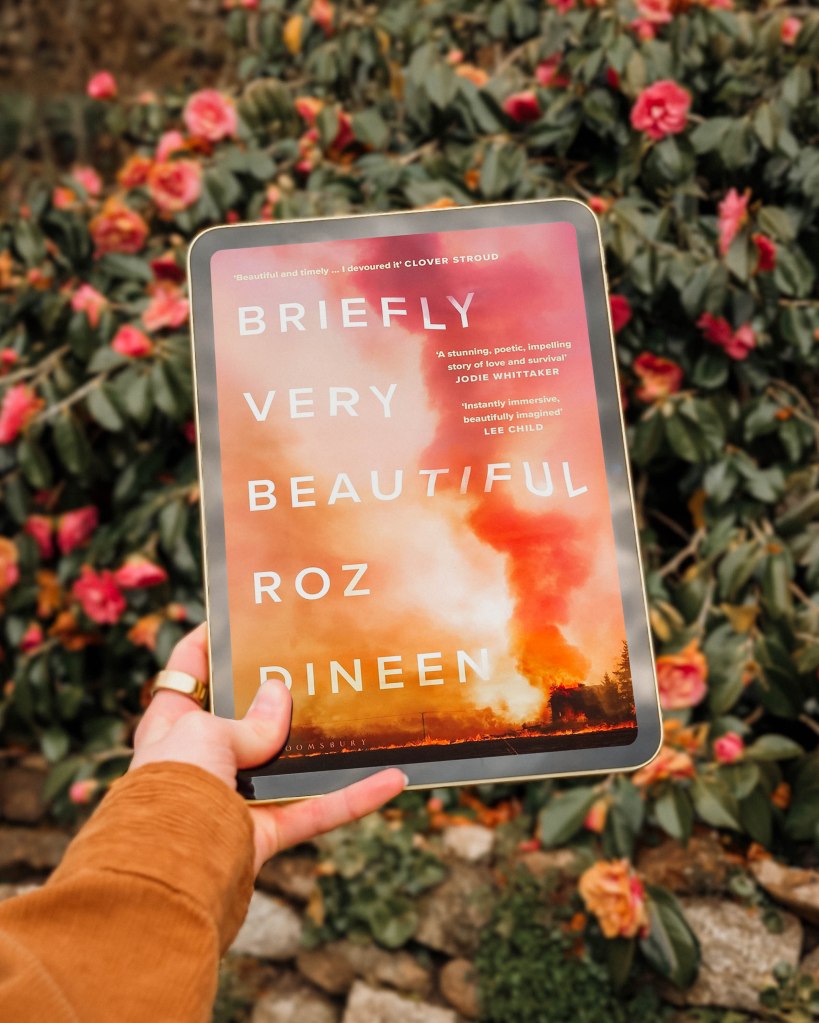
A spellbinding dystopian novel about the lengths one will go to for their children in a world teetering on the edge of apocalypse
In a land destabilized by unsafe air, wildfires, floods, viruses, supply shortages, and homegrown terror, Cass is raising three small children by herself in the city. Her husband, Nathaniel, has gone all too willingly to serve as a medic in an overseas war. His absence, and Cass’s isolation, has brought her into an exhausted but harmonious rhythm with the children; while it’s a frightening time, there is also a surprising, quiet tenderness in living on the edge of societal collapse. When things start to feel more dangerous in the city, Cass evacuates with the children to her mother-in-law’s house deep in the countryside. Initially, it’s a place of safety, but her mother-in-law’s erratic behavior and increasing grip over the children worries Cass, and so they flee again to a commune on the coast. It’s an idyllic place, but Cass comes to suspect this seemingly harmonious community has a dark underbelly.
Briefly Very Beautiful is a magnetic novel about love and resilience. Against a wider backdrop of a world imploding, it is an exploration of hope and fear, beauty and joy, as well as seismic betrayal. Roz Dineen’s lush prose combines with epic and precise world-building to create a society that feels at once unrecognizable but deeply, chillingly familiar. The result is a compelling portrait of what it is to parent through apocalypse.
Shortlisted for The Climate Fiction Prize
Genre: Adult Dystopian Fiction
Publisher: Bloomsbury
Pub Date: 2 July 2024

Review:
This is the sort of dystopian novel that is scary because the events within could so, so easily lie in our future. We follow Cass and her three children as she navigates through the climate apocalypse. Though it never says, I believe we are in the UK where the cities are unbearably hot, the midlands are on fire, power and internet are scarce and water is something to be hoarded. Cass’s husband has gone abroad ‘to help’ rather than helping his family, and so Cass has no choice but to leave their home and take the children to what she hopes will be safety.
Aside from climate change, the other focus of this book is motherhood. While that is a topic I am unable to relate to, I felt that Dineen was able to convey the thoughts and emotions of a mother, determined at all costs to protect her children, well. I felt anxious with her during the moments she had to leave her children with a certain family member, and relief when she finally moved on to places that could offer more protection.
I found the prose interesting. At times I thought I had skipped a page, or had lines of dialogue missing. I hadn’t, and while it was frustrating at times, upon finishing and reflecting on the novel I feel that it was an apt choice – it conveys the panicked and confused mind, the racing thoughts and worry that I am sure we would all be consumed by in such a scenario.
I enjoyed the journey of Cass. While I wished she would ‘grow’ faster, I appreciated the dilemmas she faced when making decisions that hampered this. Should she leave now? What if her husband really will come back this time? Is this place really as safe as it seems? Watching her eventually seize control and take action to keep her children safe was excellent.
I read this as it is shortlisted for The Climate Fiction Prize. I can definitely see why this has been nominated – its urgency, its painting of a very real possibility is needed today. Overall I found it a compelling read, and I know it will stick with me for a while.


 Pages of Emma
Leave a reply to Lin’s Perspective Cancel reply