
Synopsis:
Cornwall, 1786.
For years, the villagers of Mirecoombe have turned to their Keeper, the old and battle-scarred Lord Pelagius Hunt, mediator between the worlds of men and fey, for help. But this is a time of change. Belief in the old ways, in the piskies and spriggans, has dimmed, kindled instead in the Reverend Cleaver’s fiery pulpit. His church stands proud above the mire; God’s name is whispered, hushed, loved. And now, death stalks Mirecoombe on the moor. There are corpses in the heather. There is blood in the gorse.
Nancy Bligh is determined to do what Pel will not: maintain the balance between the fey and the human world, be the Keeper that he refuses to be. Blessed with natural sight, friend to spriggans, piskies and human locals of Mirecoombe, Nancy has power that Pel never had and never lets her use. But as Mirecoombe falls into darkness, perhaps her time has come.
A poignant and lyrical examination of faith, love and grief, Gorse asks: what do we choose to believe in, and how does that shape who we are?
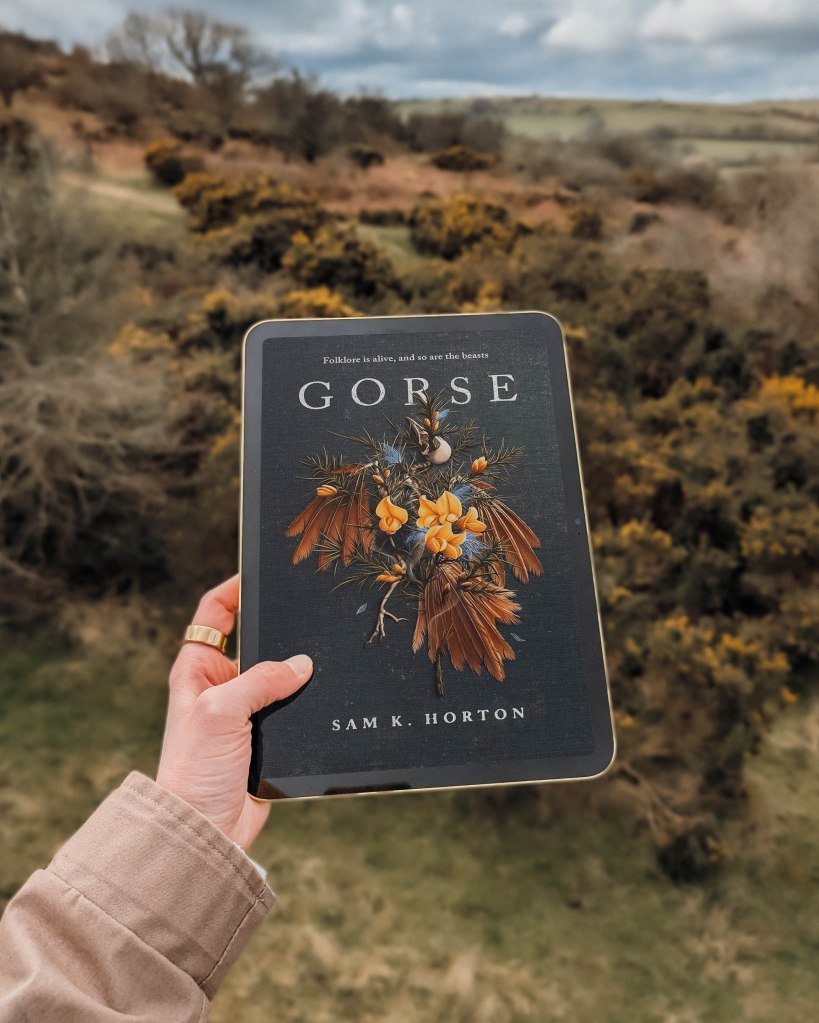
Review:
What a book. It’s atmospheric, dark, mysterious, and chock full of folklore. Set in 18th-century Cornwall, Gorse tells the story of the residents of Mirecoombe and in particular their Keeper Pelagius and his ward Nancy. The Keepers job is to maintain the balance between the worlds of the fey and humans. This balance has become precarious of late, with the Reverend Cleaver’s determination to convert the villagers to the ways of God.
I love stories that draw on local folklore, and as a Cornish resident, this couldn’t be any closer. Horton captured the moors perfectly in this book with their beautiful yet ragged and eerie nature taking centre stage. Every time I am out on the moors myself I can quite easily imagine spriggans and piskies hiding just out of my eyesight and to have a story built around them and their myths was fantastic. I also appreciated that this was not a fairytale version of the Little Folk – many of these fey are cruel and cunning.
Horton’s writing was perfect for the story he told. It is a little dense, though not in the way of walls of text, more that there was a lot to unravel. We have folklore and history, the individuals of the village and the mystery that surrounds the recent happenings within. There was no shying away either from the horrors that befell Mirecoombe – be warned that there are some grisly ends in this tale.
Pelagius and Nancy were really interesting characters to follow. We learn that Pel has had a long life and is now facing up to some of the decisions he may have made for the worse. He is stubborn and prideful, yet he does care for both the villagers and for Nancy.
Nancy faces her own struggles as an outsider in the village and against Pel as he refuses to let her help him and learn her own power. Watching her discover how strong she is and realise that she can rise to the task at hand was so good to read.
Gorse is a dark and beautiful book reflecting on family bonds, tradition, religion and grief, all tucked inside a captivating and mysterious story. I cannot recommend it enough, more so if you love folklore like I do. I am thrilled that this is the first in a series and will definitely be picking up book 2 as soon as I can!


 Pages of Emma
Leave a reply to Lin’s Perspective Cancel reply