
Synopsis:
Imagine you could hold a baby hare and bottle-feed it. Imagine that it lived under your roof and lolloped around your bedroom at night, drumming on the duvet cover when it wanted your attention. Imagine that, over two years later, it still ran in from the fields when you called it and snoozed in your house for hours on end. This happened to me.
When lockdown led busy professional Chloe to leave the city and return to the countryside of her childhood, she never expected to find herself custodian of a newly born hare. Yet when she finds the creature, endangered, alone and no bigger than her palm, she is compelled to give it a chance at survival.
Raising Hare chronicles their journey together and the challenges of caring for the leveret and preparing for its return to the wild. We witness an extraordinary relationship between human and animal, rekindling our sense of awe towards nature and wildlife. This improbable bond of trust serves to remind us that the most remarkable experiences, inspiring the most hope, often arise when we least expect them.
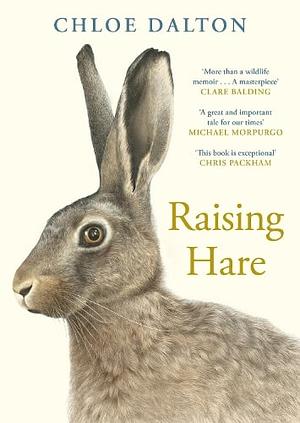
Genre: Memoir – Nature
Publisher: Cannongate Books
Pub Date: 26 September 2024
Shortlisted for the Wainwright Prize for Nature Writing 2025.
I received this book from the publisher.

Review:
A sweet, personal memoir about re-finding your connection with nature.
Abandoned by its mother, a little leveret (baby hare) is discovered by Chloe Dalton over the lockdown period of 2020. She takes the tiny creature home, worried that it will die if she doesn’t, as she believes that the leveret’s mother has been killed.
Hares are one of the UK’s most enigmatic wildlife species – so little is known about them because they are almost impossible to rear in captivity. I was happy to read Dalton’s account of her struggles and successes with the leveret, not just because the story was touching, but because it sheds some light on these wonderful creatures in a way we’ve not had before.
Something that I love in nature writing is when an author has their eyes opened to the natural world. Today, we are growing increasingly disconnected from nature, and I loved reading how Dalton was forced to change her perceptions and habits to accommodate the leveret, which in turn made her slow down and start to notice and appreciate nature. Over the course of the book, this grew into a concern for how we, humans, are affecting the world for the worse, and I did like how she reflected on and admitted her own mistakes.
The above being said, I was very pleased that the author made it very clear that people shouldn’t take wildlife into their homes. This message was repeated throughout the book, though I do worry that some people will ignore it in the hope of having their own beautiful story.
The writing was perhaps a little flowery for what I like in my nature memoirs, but overall it was a lovely and fairly quick read, and had plenty of factual information mixed through the tale.
I also want to give the artist, @denise.nestor some praise because the cover and interior illustrations are just so beautiful.


 Pages of Emma
Leave a comment